The sands of Karbala run red with the blood,
Of Husain, the grandson of the Prophet stood.
Surrounded by the foes of Yazid’s cruel band,
He fought to defend the faith with unsheathed hand.
Outnumbered and thirsty, he faced the dark horde,
Upholding the banner of justice and the Lord.
His family and comrades fell one by one,
Yet Husain’s resolve to resist remained unshone.
When the final blow came and his life was claimed,
The heavens wept, the earth shook, the skies were aflame.
A testament to courage, sacrifice, and grace,
Husain’s martyrdom stands as Islam’s shining face.
In the annals of history, his name shall live on,
As a beacon of faith, when all hope seems gone.
The lessons of Karbala shall forever inspire,
To stand for the truth, no matter the dire.
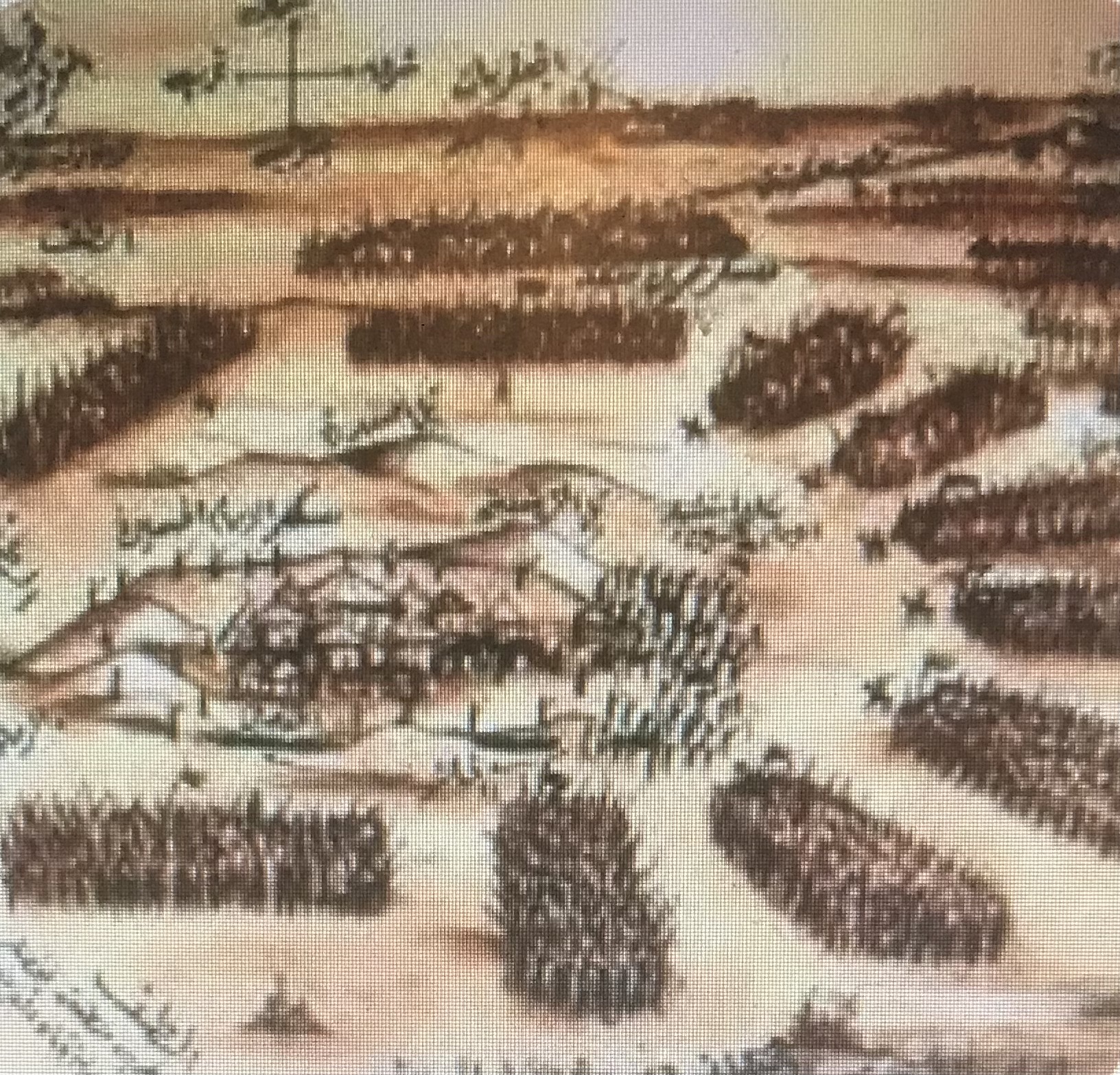
(A pictorial sketch of the location. Hazrat Imam Husain with his family, relatives and followers forced to stay in their tents are surrounded by Yazid’s soldiers)
This is the month of Muharram which is very significant as the Battle of Karbala took place on the 10th. Please read on.
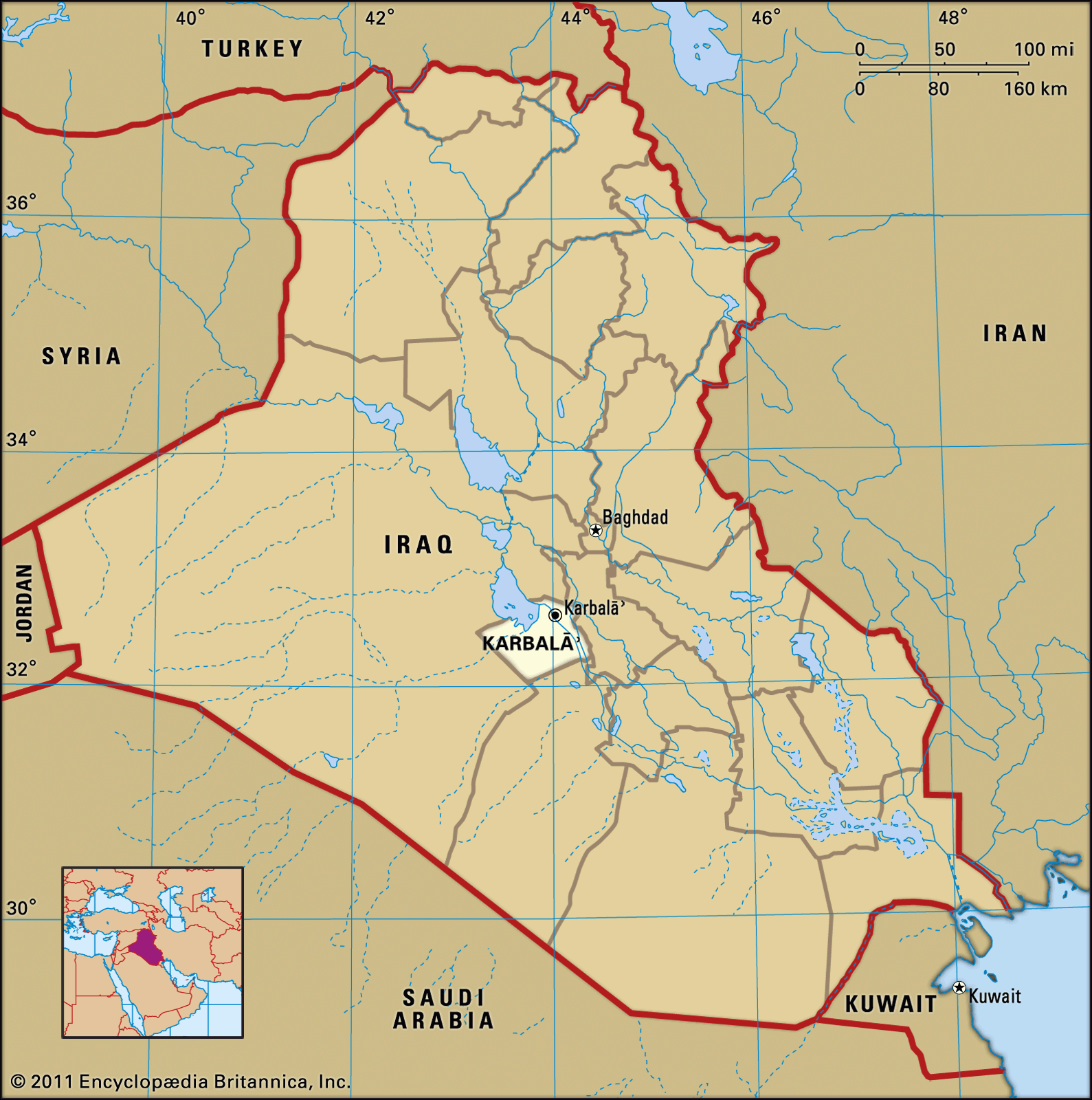
The events took place in the year 680 CE in the land of Karbala, in what is now modern-day Iraq. Imam Husain was the grandson of the Prophet Muhammad (PBUH) and a revered figure in Islam. At the time, the Umayyad caliph Yazid had demanded allegiance from Husain, but Husain refused to pledge loyalty to Yazid’s unjust rule. Yazid had no respect or reverence for the Prophet (PBUH) or his family. It was necessary for him for consolidating his power to obtain the Allegiance of Husain,the third Imam whom the Muslims listened and followed with respect and love
Husain, along with his family and a small band of followers, consisting of 72 men women & children was surrounded by Yazid’s large army of over 20,000 well armed and equipped soldiers, at Karbala. Despite being massively outnumbered, Husain steadfastly refused to submit, as he saw Yazid’s leadership as a violation of Islamic principles and teachings.
After several days of siege with no access to water, Husain and his companions fought bravely, but were eventually martyred. Husain himself was brutally killed, along with most of his male relatives and supporters. Husain’s head was severed and his body trampled by horses hooves. His head was paraded in the streets and presented to Yazid. His family members were lashed dragged on the roads and imprisoned.
This event is seen as a seminal moment in Islamic history, where Husain sacrificed himself to uphold justice, morality and the true teachings of Islam.
The martyrdom of Imam Husain is deeply revered as a powerful symbol of resistance against tyranny and oppression. The commemoration of Ashura, the 10th of Muharram when Husain was killed, is an important annual observance for Shia Muslims worldwide.
Husain’s courageous stand at Karbala is viewed as a moral victory, inspiring generations of Muslims to follow in his footsteps and fight against injustice, even in the face of overwhelming odds. The events and his sacrifice continue to hold great spiritual and historical significance for Muslims across sects and is mourned every year even after 1400 years.
The population of mourners at Karbala often exceeds the devotees performing HAJ at Mecca.
After the tragic events of Karbala, Shia Muslims developed a rich set of rituals and commemorations to remember and honor the martyrdom of Imam Husain. Some of the key practices that emerged include:
1. Ashura Observance:
– The 10th of Muharram, the day Husain was killed, is observed as Ashura by Shias. Fasting during day the momins hold Majalis.
– This day is marked by solemn processions, self-flagellation, and reenactments of the Battle of Karbala.
– Shias engage in mourning rituals, such as chest-beating and reciting elegies (marsiya) to commemorate the tragedy.
2. Mourning Assemblies (Majalis):
– Shias hold gatherings called Majalis throughout the Islamic month of Muharram to collectively mourn and remember Husain’s martyrdom.
– These assemblies feature sermons, recitations of the Karbala narrative, and passionate expressions of grief.
– Shia scholars and orators deliver speeches (rawdah) to recount the events and highlight the lessons and significance of Husain’s sacrifice.
3. Passion Plays (Ta’ziyeh): in a few countries.
– Elaborate dramatic performances, known as Ta’ziyeh, reenact the events of Karbala and the martyrdom of Husain and his companions.
– These plays, which can last for several days, are performed by troupes of actors in specific religious or community settings.
– The performances are accompanied by chanting, music, and visual elements to evoke the emotions and gravity of the Karbala tragedy.
4. Pilgrimages (Ziyarat):
– Shias undertake pilgrimages to the shrine of Husain in Karbala, as well as the shrines of other Shia Imams and saints.
– These visits, known as Ziyarat, are seen as a way to connect with the spiritual significance of Karbala and pay respects to the martyrs.
– Pilgrims often engage in recitation, prayers, and rituals at the shrines to commemorate Husain’s sacrifice.
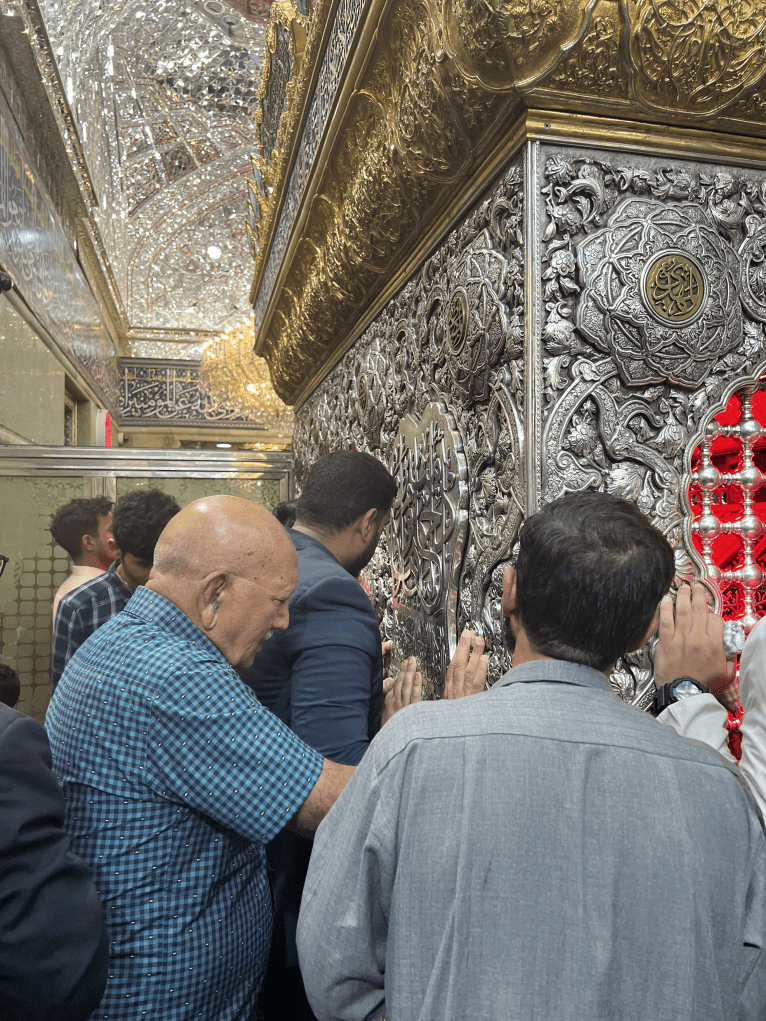
(Reciting Fateha at the grave of Hazrat Imam Husain at Karbala)
These and other commemorative practices have become deeply ingrained in Shia cultural and religious life, serving to preserve the memory and significance of the Karbala tragedy for generations of Shia Muslims.
Imam Husain’s martyrdom at Karbala had a profound and lasting impact on the development and identity of Shia Islam:
1. Solidifying Shia Theology and Identity:
– The tragedy of Karbala cemented the Shia belief that the rightful successors to Prophet Muhammad were his descendants, particularly Husain and his father Ali.
– Commemorating Husain’s sacrifice became a core part of Shia religious practices and identity, with events like Ashura becoming central to Shia spirituality.
– Shias viewed Husain’s martyrdom as an unparalleled example of steadfastness in the face of oppression, solidifying their theological position as the true defenders of Islamic values.
2. Expansion of Shia Islam:
– The emotional and spiritual impact of Husain’s martyrdom helped drive the rapid spread of Shia Islam, especially in regions like Iran, Iraq, and parts of the Levant.
– The tale of Karbala was powerfully disseminated through poetry, literature, and religious storytelling, inspiring generations of Shia Muslims.
– Shia communities across the world built shrines, mosques, and other institutions to commemorate Husain, further entrenching Shia identity.
3. Political and Ideological Implications:
– Husain’s refusal to pledge allegiance to the Umayyad caliph Yazid set a precedent for Shia resistance against unjust political authority.
– The Karbala event became a rallying cry for Shia opposition to Sunni caliphates and dynasties, fueling periodic revolts and uprisings.
– Shia theology developed a stronger emphasis on the importance of righteous leadership and the need to challenge corrupt rule, in contrast to Sunni traditions.
Overall, the martyrdom of Imam Husain was a transformative moment that solidified Shia Islam as a distinct sect, with its own theological and political identity centered around the noble sacrifice at Karbala. This event continues to shape Shia beliefs, practices, and their relationship to the broader Muslim world.
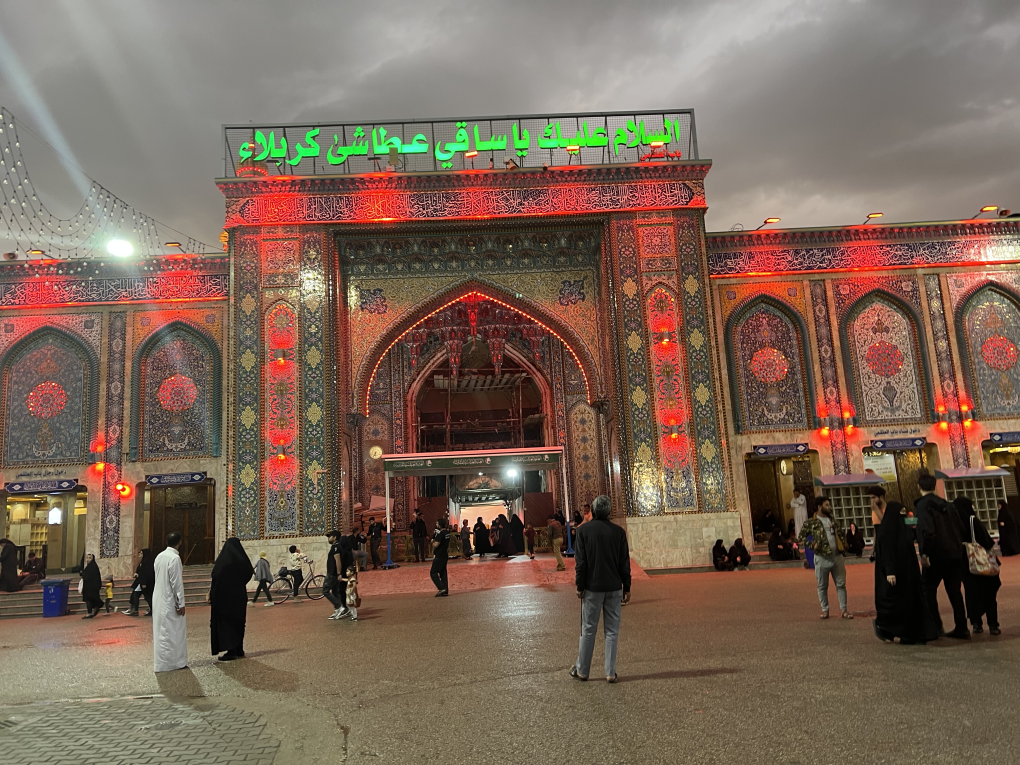
(Karbala Masjid and shrine; Millions of devotees pray here every year)

 Impressions, Perceptions and Views.
Nice articles and poetry Sir, all the best wishes and regards.. PT
LikeLiked by 1 person
Many thanks PT. Have gone through your writeups and have enjoyed reading them. Your fair and effective views on topical topics are revealing and objective. Will l comment on them separately. Best wishes and God bless.
LikeLiked by 1 person
The description of Muharram and narration of the tragedy at Karbala is very vivid and heartily rending.Pray the observance of Muharram awakens all followers of the faith towards the path of righteousness and piety.Aameen.
LikeLiked by 1 person
Arz Hai
Zalimon ne zulm kar ke sirf payee badnami
Shahidon ne zulm seh kar chodi beimisal Nishani
Lanat aur bad dua dete hain hum jab hota hai zikr Yazid ka
Ehteram Tareef Izzat karte hain sab sadion se Imam Husain Ka
LikeLiked by 1 person