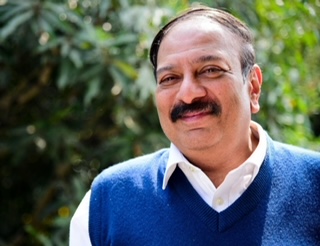
Kingshuk Nag has been the editor of The Times of India in Hyderabad and Ahmedabad for the last fifteen years. He served as senior journalist at New Delhi and Bangalore. Nag was awarded, The Prem Bhatia Award in 2002 for his excellence in the analysis and political reporting. He is now spending his retirement at Hyderabad.
Let the Truth Be Told
By Kingshuk Nag
One of the closely held secrets of India’s freedom struggle is the role played by Netaji Subhas Chandra Bose and his Indian National Army (INA) in making the colonial masters exit this country. The present wisdom that is based on the narrative built by scholars close to the first rulers of Independent India give almost the entire credit of attaining freedom to the Congress party and its programme of non- violence and satyagraha. They argue that the ‘soul force’ generated by the non- violent civil disobedience coupled with war fatigue experienced by the British after World War II made them quit India. But this is a largely faulty narrative which fails to give credit where it is due.
The fact of the matter is that the colonial masters exited India only because of the fear in them instilled by the INA. They apprehended that the British Indian army inspired by the fight put by the INA would break out in rebellion like in 1857 and kick the British out of India. Wanting the successor Indian government to be similar (as much as possible) to the British Indian government, the British quickly left India to prevent the possibility of being forcibly evicted.
Netaji was supposed to have died in an air crash in Taipei on August 18 1945, but the British received this information with a pinch of salt and skepticism. They believed that this was a case of deception as per a plan of Netaji. Their belief was proven right when – a couple of months later – between December 1945 and February 1946- transmissions of three broadcasts by Netaji were picked up by the Governor House in Calcutta. The records of the transmission (on short wave 31) were kept in the Prime Minister’s Office (File No 87011p1692 Pol). But the contents have now been declassified. In the first broadcast on December 26 1945, Subhas Bose said:” I am at present under the shelter of great world powers. My heart is burning for India. I will go to India on the crest of a third world war. It may come in ten years or even earlier. Then I will sit on judgment upon those trying my men at Red Fort.” In his second broadcast on January 1 1946, Netaji said: “We must get freedom within two years. The British imperialism has broken down and it must concede Independence to India. India will not be free by means of ‘non –violence.’ But I am quite respectful to Mahatma Gandhi.” The third broadcast was in February 1946. Netaji said: “This is Subhas Chandra Bose speaking. Jai Hind. This is the third time I am addressing my Indian brothers and sisters after Japan’s surrender. The PM of England is going to send Mr. Pethick Lawrence and two other members from England with no other object in view other than let the British Imperialism a permanent settlement by all means to suck the blood of India.”
Lt General Srinivas Kumar Sinha was one of the most celebrated soldiers of India who after retirement from the armed forces went on to become the Governor of Jammu & Kashmir and Assam. In August 1946 he was one of three Indian officers of the British Indian Army who were posted to the Military Operations Directorate (MOD). Sinha, who died in 2017, wrote in the Asian Age on 16 February 2016 that his
predecessor in MOD was a British officer who had been conscripted for war time duties. So he was in a great hurry to leave India and get back home. He handed over the keys of a “top secret” almirah to Sinha and quickly left without actually handing over the files. On opening the almirah, Sinha found two files with a strange security classification. It said: “Top secret not for Indian eyes.” Sinha wrote that the first file incorporated a paper written by Major General O’Brien, of the Directorate of Military Intelligence on the loyalty of the Indian officers of the British Indian Army. The main points were that the Indian army had expanded from 450 Indian officers to 12,000 Indian officers in the period 1939-45. This was in view of emergency recruitment for the wartime. In the same period personnel below the officer rank had increased from 1.5 lakh to 2.2 million.
According to Sinha, the note grouped the Indian officers into three categories. The first category comprised officers commissioned before 1933 and who had been trained in Sandhurst (in Great Britain). The second category consisted of officers who had been commissioned in the period 1933-39. The third category comprised wartime commissioned officers. The note then suggested the officers in the first category were ‘safe’ from the British point of view and the officers in the second category had some grouses regarding pay parity with white officers. The officers in the third category –who were the most numerous- were’ most unreliable’ and had been exposed to the ongoing movement for Independence. Unstated but implied was the fact that these officers could change their loyalty and be part of the forces to liberate India. Hence a close watch should be kept on them.
The second file in the top secret almirah was related to ‘Operation Gondola’. This was the code name for a plan for safe evacuation for British civilians who were located all cross the country- in case the need arose. In the first phase these civilians would be escorted to camps in select cities/ports of India like provincial capitals. In the second stage, these civilians would be taken away from the country. In total there were about 43000 British citizens in the country.
The British raj in India had been held together by Indian soldiers and it is clear from a reading of these files that at the end of the War, British colonialists were no longer sure of the loyalty of the Indian officers and men of the army. Moreover gearing up to such an eventuality, they drew up top security plans on how to evacuate the British from India.
The question is why were the British establishment fearing acts of disloyalty and rebellion by Indian forces? Here is where the INA comes in.
Though the men of the British Indian army and the Indian National Army were drawn from the same stock there was a significant difference of outlook among the two. The British Indian Army had been raised to protect and perpetuate the British raj in India. Therefore the British raised an army that would work in consonance of their plans and this included internal security of the country. They did not want to touch the feudal social fabric of the country. The easiest way for them was to raise an army based on castes, religions and regions. Grouping soldiers on lines of castes and communities would keep their identity as a Rajput, Muslim or Gorkha intact and foster bonds based on community. In the ultimate analysis this would prevent the rise of the feeling of nationalism among the soldiers –whose national consciousness would remain subservient to their caste or community identity. This would not allow them to rear their head against the British.
But Netaji Subhas Chandra Bose understood this clearly. For this reason he endeavored to set up a national army where the soldiers were first committed to the nation (which was then in British shackles). To foster this feeling of nationalism and aiding the breaking down feelings of caste and community, he raised mixed regiments of the INA. Thus, as an example the Sikhs, the Rajputs and the Muslims were all part of the same formation mixed down to the company level. Needless to add all the men ate food cooked in the same kitchen. This further assisted breaking down caste and religious barriers. Unlike what was the case in INA, the British Indian army had separate kitchens for soldiers of different castes and communities. Further the INA responded to the slogan of Jai Hind while the regiments of the British Indian Army had their own battle cry based on their narrow identity. Much ahead of his time, Netaji also insisted upon the formation of a woman’s battalion- headed by a woman commandant – that was called the Rani of Jhansi regiment. Netaji also wanted women in combat roles. To further foster nationalistic feelings among the men of INA, Netaji insisted on military music and community singing. He also had an INA flag made: this had the Indian tricolor with the Royal Bengal tiger springing on a prey at the centre. The INA at its peak had 60,000 men and 1500 officers who were organized in three combat divisions. When the Allied forces had surrendered to the Japanese at Singapore in 1943, 20,000 of the 60,000 Indian soldiers who gave up to the Japanese joined the INA.
Ultimately some 26,000 of these 60,000 INA men died in their fight against the British and its aftermath. The INA men participated along with the Japanese combatants in two major battles of World War II. The battles of Imphal and Kohima, fought on the north east corner of the country were two very important battles in the Second World War that tilted the balance in favour of the Allied Forces. When these battles were taking place, there was very strict military censorship of news in India. As a result, Indians were totally ignorant of the fact that INA was fighting alongside the Japanese in these battles. The aim of the supreme commander of the Indian forces Netaji Subhas Chandra Bose was to trigger a massive uprising in the country against the British which he hoped would be catalyzed by the news of the INA fighting on Indian borders. The existence of “Inner Line” restrictions that did not allow Indians to travel to interiors in the north east without official permission further curbed the flow of information by way of word of mouth about the INA exploits. It is for this reason that Netaji was keen that combined INA and Japanese army attack India be through Chittagong. In that way the attack would be on the mainland of India and word would travel fast – the censorship notwithstanding. But that was not to be with the Japanese afraid that British intelligence network would gather this information before hand and attack the forces the moment they landed.
The Allied Forces which at one time looked vulnerable were ultimately able to win the Second World War. After winning the War, the British thought that they would severely punish the men of the INA for their mutiny and make a lesson out of them for the future in the same manner as the rebels of the 1857 War of Independence had been. Reminiscent of the trial of the last Mughal king Bahadur Shah Zafar at Delhi’s Red Fort, the British colonialists brought to public trial three officers of the INA. Red Fort was chosen not only to bring back the historical memories of the 1857 trial but also because Subhas Bose had given out cries of “Delhi chalo.” One officer was a Muslim (Lt Colonel Shah Nawaz Khan), another officer was Hindu (Colonel P K Sahgal) and the third was a Sikh (Colonel G S Dhillon). This was to convey the impression that the British Indian government was not discriminating against any religion. In the aftermath of 1857, the Muslims had felt that they had been specially punished.
The British Indian government had felt that with the end of the War as censorship had been lifted, tales of the INA collaborating with the Japanese to raid their own motherland would provoke Indians to hate them. The same hatred would be generated amongst soldiers of the British Indian army who had stood loyal to the colonial masters. They would see the INA collaboration with the Japanese forces of occupation negatively. But the reverse happened. As the tales began to be spread about the acts of bravery of INA men, how they had waged war to free India and made the supreme sacrifice for the cause, the chests of ordinary Indians began to swell. There was unprecedented sympathy for the INA and pride for in their bravado. A section of the personnel of the British Indian Army who had not defected and not joined the INA started feeling ‘sheepish’ that they had fought on the wrong side. The Congress party ( which had forced Netaji out of the party) and the Muslim League correctly read the mood of the nation and the enormous tide of support for the INA and came out in support of the INA men who had been put on trial. To cash in on the immense popularity of the arraigned INA officers, even Jawaharlal Nehru donned the lawyers’ robes. The proceedings of the public trial only enhanced the image of the INA men. Geopolitical expert Stephen Cohen in a study on ‘Subhas Chandra Bose and the Indian National Army’ that is part of his anthology titled The South Asian Papers quotes from the autobiography of Colonel P K Sahgal who wrote that he had inherited an extreme dislike for an alien rule from his father who had participated in the civil disobedience movement and that his study of history and political science had taught him that ‘it was the sacred duty of every Indian to fight for the liberation of the motherland.’
Cohen further notes that a ‘significant reason for the attractiveness of the INA was the internal policy of the Indian army under the British, particularly regarding promotion policy, devolved authority, trust and personal treatment by British fellow officers’. By implication Indians had joined the British Indian army due to the pressures of building a career and were stifled there. They also fell for the nationalistic sentiments the moment it was fanned by Subhas Bose and the INA. Given the first opportunity many of them deserted the mercenary British Indian Army and joined the INA that did not even have a ‘pay’.
What happened after the conclusion of the War bears eloquent testimony to the thesis that it was finally the fear of INA that forced the British out of India. The major impact of the INA trials were seen in widespread rebellion in the ranks of the Royal Indian Navy (RIN) in February 1946, followed by that in the Royal Indian Air Force (RAF) and finally in the British Indian army units in Jabalpur in the same year. The RIN action saw 10,000 sailors in 66 naval ships and shore establishments from Karachi to Calcutta rise in rebellion. Ostensibly the demands were for better rations and service conditions but were actually against the British raj. The action by men of the RAF were to express sympathy for the naval rebels but the army units in Jabalpur did not fail to raise the issue of treatment of INA soldiers in the course of their strike. Though all these rebellions were successfully quelled by the British (with dollops of help coming from Congress stalwarts like Nehru and Patel) it was an eye opener for the British that it was time for them to leave before the situation turned more adverse.
Perhaps the most telling statement describing the British imperatives for leaving India came from none other than Lord Clement Atlee who was the Prime Minister of Great Britain when India got independence. On a visit to Calcutta in 1956, Atlee ( by then an ordinary citizen)was quizzed by the chief justice of Calcutta High Court (who was then the acting Governor of West Bengal) P V Chuckraborty about why the British left India. The acting Governor prefacing his statement with the remark that the Quit India movement had died out much before 1947 and there was nothing in the Indian situation that made it necessary for the British to leave India in a hurry wondered why they had done so. Atlee in his reply cited several reasons the most important of which were the INA activities of Netaji Subhas Chandra Bose which weakened the foundation of the British Empire in India and the Royal Indian Navy mutiny that made the British realize that the Indian armed forces could no longer be trusted to prop up the British. When asked on whether the British decision to quit India was influenced by Mahatma Gandhi’s 1942 movement, Atlees’s lip widened in a smile of disdain and he uttered slowly, ”minimal.”
Thus India got freedom in 1947 only because of INA. Had it not been for Subhas Chandra Bose, India would have got freedom later – till another set of factors impelled the British to go out.
What is sad is that Netaji was not around when India got freedom. He was probably in an internal security prison in USSR. As the War was ending, Netaji averred that he needed to carry on his battle to free India. At that point he did not realize that enough traction had been built within the country: enough that a final shove would push the British out of the country. So Subhas Bose made good his escape to the USSR through Manchuria faking an air crash in Taipei, Taiwan. He wanted to carry on his battle from USSR if he were able to convince the rulers there. Netaji told senior representatives of Japan who had just lost World War II that he would lobby with the bosses in USSR to take a lenient view of the role of that country. Buoyed by this hope, the Japanese assisted Netaji to escape into USSR and also sent a Japanese general Lt General Tsunamasa Shidei to help him surrender to the Red Forces. Shidei knew very good Russian and had experience of negotiating international treaties. Thus he would be useful. Netaji wanted to go to Omsk in Siberia where a representative office of the Azad Hind government had been set up when World War II was on.
We have no authentic information of what happened after Netaji entered Soviet territory. Possibly he was kept in an internal detention centre as Stalin began to wonder what to do with him. Stalin had a very poor opinion about Mahatma Gandhi and Pandit Nehru and had just rudimentary knowledge about India. He had even been told that Subhas Bose came from a huge landholding family. This is even as the British government who also suspected that the air crash story was stage managed and not true began speculating what to do with Netaji if he was found. Apparently they came to the conclusion to let Netaji be where he was. In other words let the Soviets deal with Netaji. Meanwhile as early as 1943, the British suspecting that Netaji would ultimately seek assistance from USSR decided to play dirty. A letter was sent by MI 6 on December 11 1943 to Soviet intelligence suggested that Subhas Bose was a British agent and all through his activities were supported by British intelligence. The letter claimed that Subhas Bose was allowed to go to Germany by the British with ulterior objectives. This was a false claim but aroused suspicions in the minds of the Soviet bosses. This must have played on the mind of Stalin when he had to decide on Netaji’s fate after he showed up in the country. From whatever little records that we have, for starters the Soviets were ready to sponsor Netaji to lead a rag tag army through Afghanistan into India.
Realizing that such a plan (of Netaji leading a rag tag army to India) was in the offing, the British got acting even as Congressmen caught on the wrong foot must have been panicking. According to records declassified from the National Archives, Khurshed Naoroji, secretary to Mahatma Gandhi wrote to Louis Fischer on June 22 1946: “At the heart the Indian Army is sympathetic to the INA. If Bose comes with the help of the Russian, neither Gandhiji nor Nehru nor the Congress will be able to reason with the country.” Lord Mountbatten as Viceroy of India he advanced the day of Independence (and partition of India) to August 15 1947 from September 1948. The announcement was made on June 3 1947 barely two and a half months before D-day. The reason is easy to figure out: the British wanted India to continue the same way as they had ruled and Lord Mountbatten had convinced Nehru (through whom he operated) of the same. The British knew that if Netaji came he would radically transform the way that the country was governed and he would also prevent the partition of India. So they were in a hurry to leave India. Their early exit sealed the fate of Netaji in USSR and reduced his utility to the Soviets. What happened to him thereafter remains a matter of speculation. But one thing is clear: Netaji has not been given his dues in Independent India. Even though he is highly respected by the people at large there have been efforts by the powers-that- be for decades to underplay his role in the freedom of India. I sincerely hope that this changes now and for starters let’s rename Kartavya path (the former Rajpath in New Delhi as INA Avenue) and name Netaji as the father of Indian freedom. (This is based on a talk delivered by the author at Asiatic Society, Kolkata)