
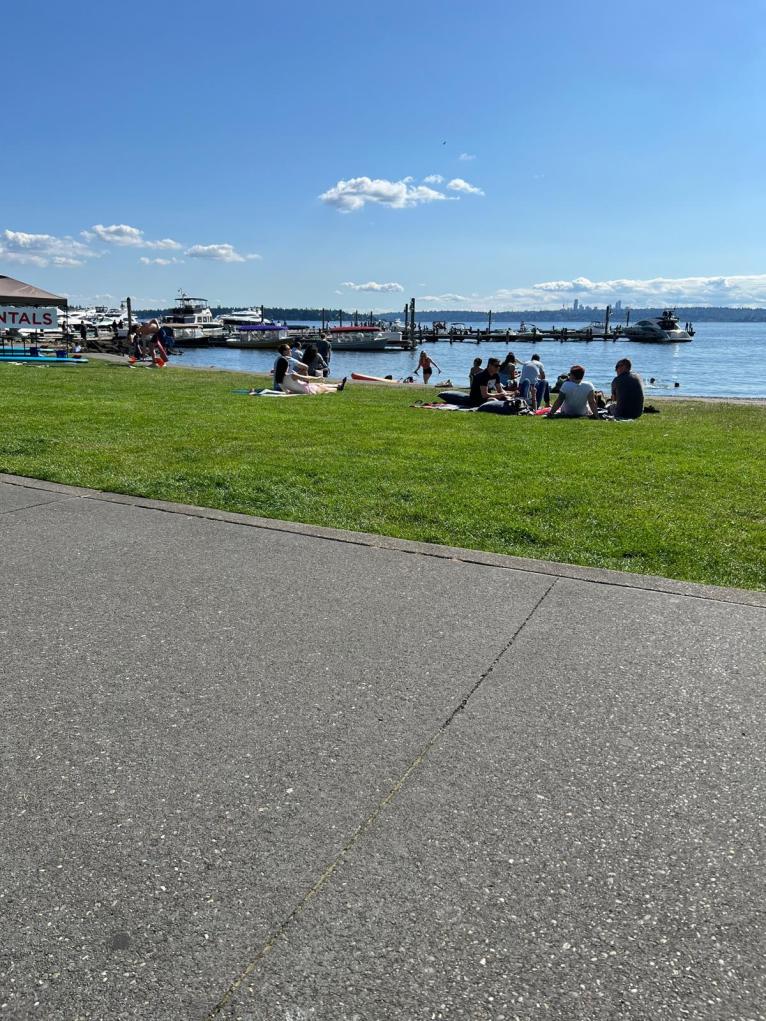
The sun, molten gold, poured over Lake Washington, fracturing into a million shimmering diamonds on the gentle waves. I sat on the bench at the Kirkland waterfront breathing in the cool, damp air mingled with the faint scent of lake water and coffee from the nearby cafes. These were the stolen moments, a pause in the day, in stark, almost jarring counterpoint, to the relentless drumbeat of news emanating from a fractured world.
As I watched the people around me, I couldn’t help but ponder how the simple acts of joy and connection I witnessed were, in many ways, a rebellion against the chaos that defines many lives globally. Each smile, each shared moment, seemed to assert the value of human connection amidst the forces that seek to divide us
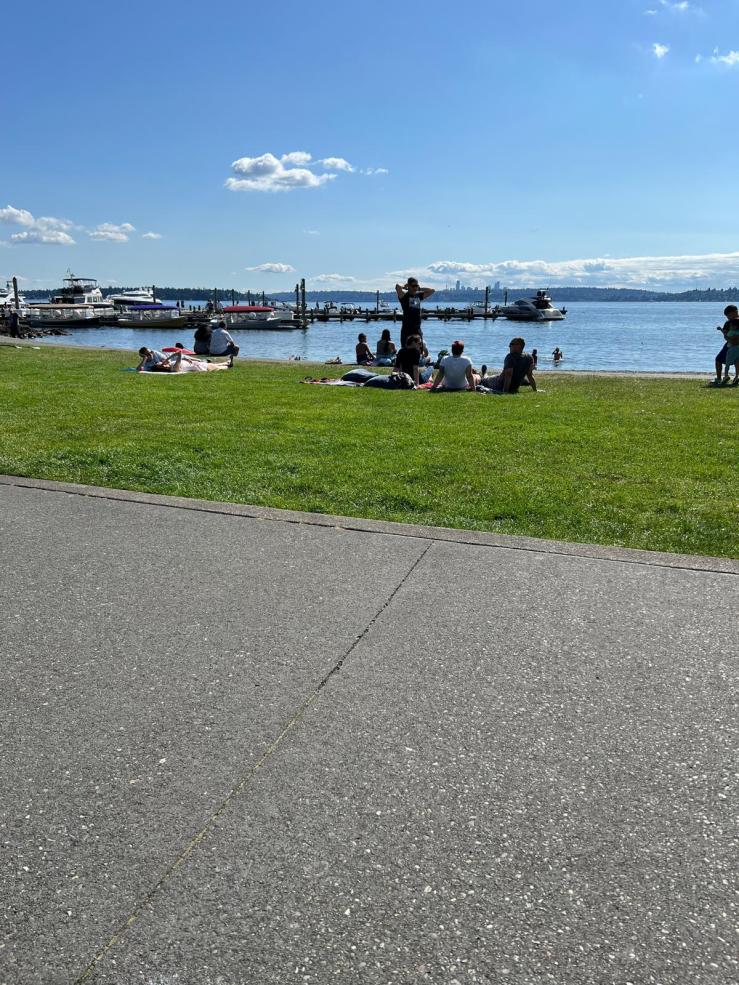
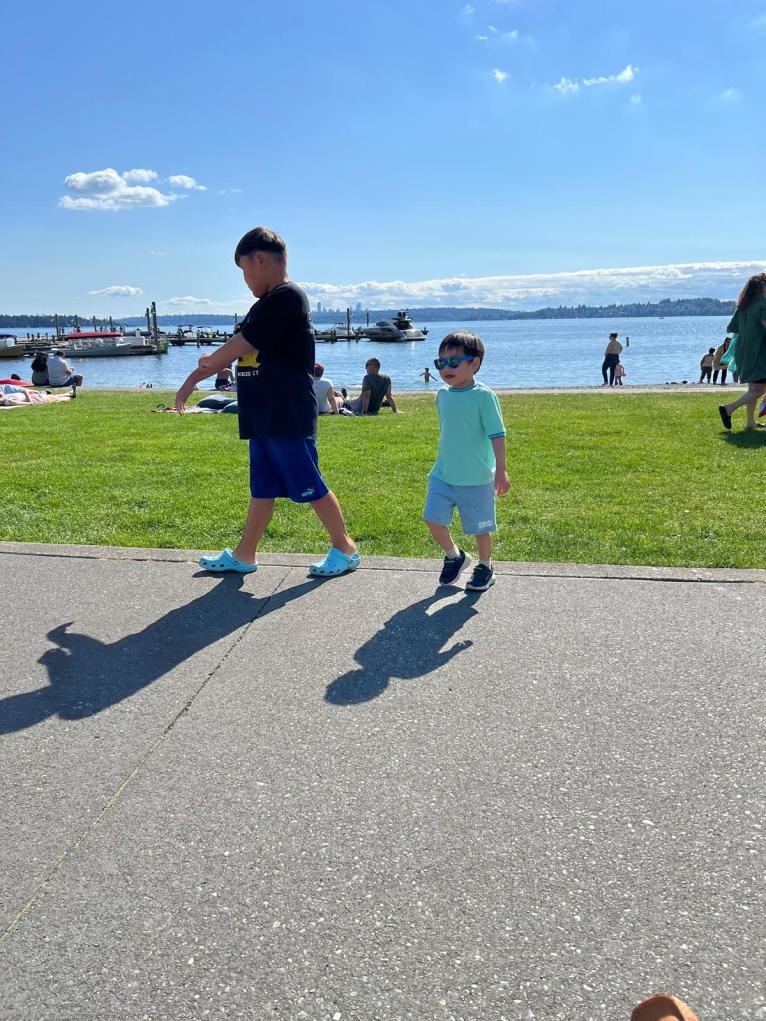
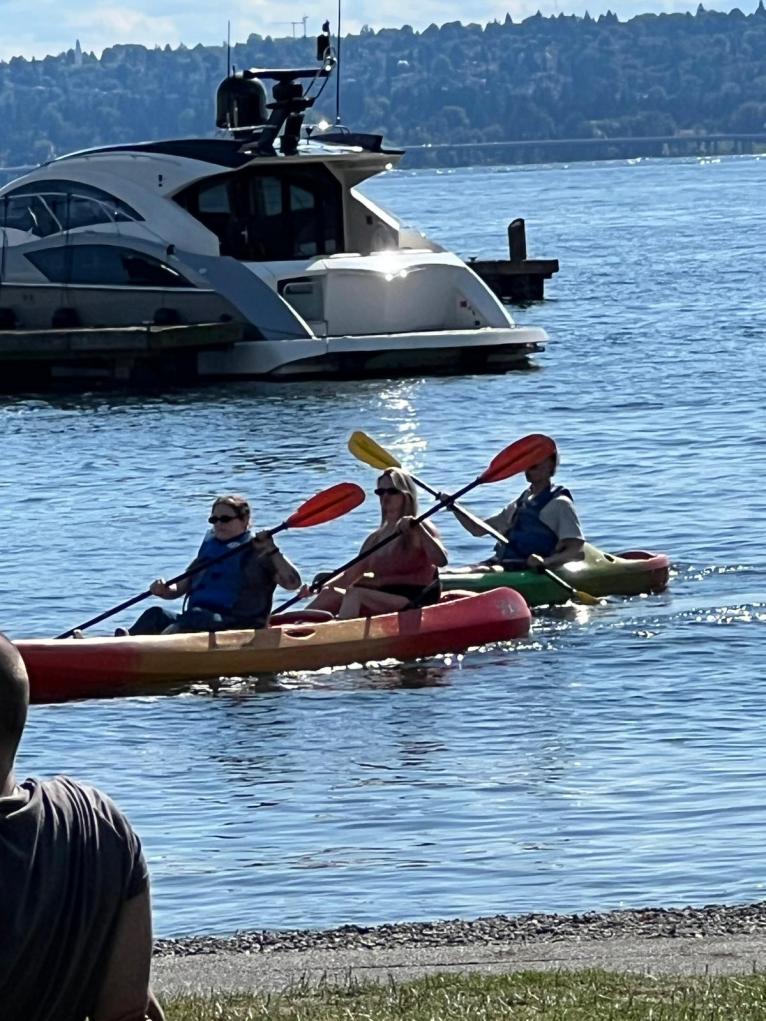
Before me unfolded a tableau of ordinary, peaceful existence. A woman, perhaps in her sixties, moved with deliberate grace through a yoga sequence, her arms tracing slow arcs against the backdrop of the Seattle skyline across the water. Her focus was absolute, a meditation in motion. Nearby, a young couple, fingers intertwined, leaned against the railing, murmuring to each other, their laughter soft and private, absorbed in the bubble of their new love. A group of teenage boys, all energy and loose limbs, jostled good-naturedly, attempting skateboard tricks on the smooth pavement, their shouts punctuated by the clatter of wheels and occasional whoops of success or failure. A man in running gear, face set with determination, pounded past, his rhythmic breath a steady counterpoint to the lapping water. A father patiently helped his toddler navigate a balance bike, his encouragement gentle and unwavering. The kayakers dipped a paddle with smooth, efficient strokes, gliding silently towards the distant marina.
Male and female, young and old, they were simply engaged in acts of leisure, connection, exercise, and quiet contemplation. The activities were mundane, universal: the pursuit of health, the comfort of companionship, the joy of play, the serenity of solitude in nature. There was no visible tension, no outward hostility, no sense of division beyond the usual personal bubbles we maintain in public spaces. It was a scene of unremarkable, beautiful peace.
Yet, as I absorbed this tranquility, the dissonance was profound. Because superimposed upon this calm tableau were the images and headlines that haunt our collective consciousness: the horrific, grinding destruction of cities in Ukraine; the unbearable suffering and devastation in Gaza; the devastation of cities in Israel and Iran and the simmering tensions and outbreaks of violence across countless other regions. Hostilities driven by ancient hatreds, geopolitical ambition, resource scarcity, and the terrifying ease with which humanity dehumanizes the “other.” The contrast was not merely geographical; it felt existential.
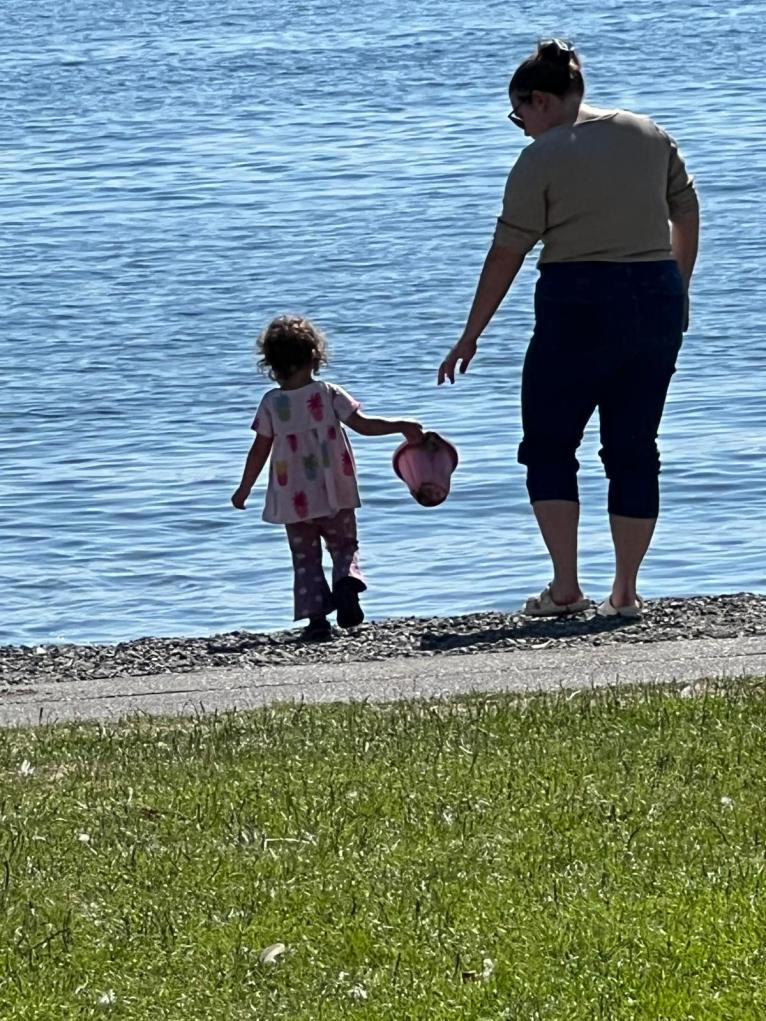
Here, on the Kirkland waterfront, the fundamental human activities were constructive and life-affirming. The runner built endurance. The yoga practitioner cultivated inner peace. The couple nurtured connection. The father fostered growth. The kayaker sought harmony with the elements. Even the skateboarders tested their limits playfully.
But the hostilities raging globally represent the precise opposite: the systematic dismantling of life, community, and hope. They are the ultimate acts of deconstruction – of homes, of bodies, of futures, of trust. Where the Kirkland scene showcased individuals and groups operating largely alongside each other, respecting an unspoken social contract, the conflicts represent the violent rupture of any such contract. They are fueled by narratives are evident here – the man feeding the ducks, the woman reading on a bench, the child chasing a seagull compared to reducing people to categories, threats, or collateral damage.
Observing the effortless coexistence on the waterfront – men and women sharing the space without conflict, different ages and activities blending into the scenery – underscored the tragic unnaturalness of the world’s hostilities. The capacity for peace, for simply living without fear of sudden annihilation, isn’t some utopian fantasy; it’s demonstrably possible, as this ordinary afternoon proved. The human drive for connection, health, and simple enjoyment is powerful and pervasive, visible in every jogger’s stride and every shared laugh.
The moment became a poignant reminder. The peace of Kirkland’s waterfront isn’t the absence of complexity or difference; it’s the presence of a fragile, hard-won consensus. It rests on foundations of relative security, stability, and a shared, albeit imperfect, commitment to social order that allows individuals to pursue their harmless endeavors. The hostilities tearing the world apart are the catastrophic failure of those foundations elsewhere. They represent what happens when dialogue crumbles, when empathy evaporates, when the desire to dominate or destroy overwhelms the basic human impulses towards preservation and connection witnessed here in every passing cyclist and every couple sharing ice cream.
Yet, the waterfront was not without its own subtle tensions. A heated conversation between two men near the marina hinted at a disagreement, their voices rising briefly before they parted ways. A woman walking alone quickened her pace as she passed a group of boisterous teenagers, her body language cautious. These fleeting moments reminded me that even in peaceful settings, human interactions are complex and not always harmonious. They mirrored, in miniature, the larger conflicts that plague the world—misunderstandings, mistrust, or competing needs. But unlike global hostilities, these small frictions at the waterfront resolved quietly, without escalation. Perhaps there is a lesson here: conflict is inevitable, but its resolution depends on a willingness to step back, to listen, and to prioritize shared humanity over division.
Leaving the waterfront, the cool lake breeze still on my skin, the weight of the world felt heavier. The laughter of the teenagers, the focused calm of the yoga practitioner, the simple act of the father holding his child’s hand – these weren’t just pleasantries. They were quiet, powerful rebukes to the cacophony of hate and destruction. They were evidence of the normalcy we strive for, the baseline of human existence that global hostilities so violently obliterate. In that brief Kirkland moment, amidst the joggers and the lovers and the ducks bobbing on the water, lay a profound truth: the peace we often take for granted is the very thing being relentlessly attacked elsewhere, and its preservation demands our constant, conscious effort, far beyond the serene boundaries of the waterfront.
As the sun dipped lower, casting a golden glow over the lake, I reflected on how the Kirkland waterfront encapsulated both the beauty and the fragility of human existence. The people I observed—men and women, young and old—were living their lives in ways that felt universal, yet their ability to do so freely was a privilege not shared by all. The hostilities across the globe, from wars to ideological battles, threaten the very moments of peace and connection I witnessed. But those same moments offer hope. They remind us that people, at their core, seek the same things: safety, joy, and belonging. If we could extend the empathy and civility of the waterfront to the global stage, perhaps the hostilities that divide us could give way to a shared pursuit of peace.
In those few moments at the Kirkland waterfront, I saw a reflection of what the world could be—a place where differences coexist, where small acts of kindness prevail, and where humanity thrives despite its flaws. The challenge lies in carrying that vision beyond the shores of Lake Washington, to a world where hostility too often drowns out the quiet beauty of shared existence.

 Impressions, Perceptions and Views.
Such peace and tranquility is a rare phenomena in the unequal world. In a country bursting at the seams with people, where finding the next meal is a problem, where there is internal strife based on relegion, language, caste is a constant turmoil, such scenes as in the pictures shown look so unreal. I am talking about my country. Everyday the papers scream of deaths and injuries due to a blast in a chemical factory, a fire crackers factory or the rape of innocent women irrespective of age. Under such circumstances, the tranquility at the Kirkland water front is just a dream.
LikeLike
Many thanks for a frank and incisive comment.Yes we do have similar locations in India, however we are entangled with destrutive ideas and actions. Hopefully we witness better days in future.
LikeLike
Many thanks for a frank and incisive comment.Yes we do have similar locations in India, however we are entangled with destrutive ideas and actions. Hopefully we witness better days in future.
LikeLike