The Sacrifice of Hazrat Imam Hussein at Karbala: Principles, Martyrdom, and Universal Legacy
Hazrat Imam Hussein ibn Ali, the grandson of Prophet Muhammad (peace be upon him), stands as one of the most revered figures in Islamic history. His stand against Yazid ibn Muawiya and the events of the Battle of Karbala in 680 CE (61 AH) on the 10th of Muharram embody themes of justice, resistance to tyranny, and ultimate self-sacrifice. This essay explores the reasons for his refusal of allegiance to Yazid, his decision to confront overwhelming odds at Karbala, historical parallels, lessons for non-Muslims, and the event’s particular resonance within Shia Islam.
Reasons for Not Accepting Allegiance to Yazid ibn Muawiya
Imam Hussein’s refusal stemmed from deep moral, religious, and political convictions. Yazid’s ascension marked a shift toward hereditary monarchy and rule marked by corruption, impiety, and deviation from Islamic principles. Imam Hussein viewed pledging allegiance (bay’ah) to such a figure as legitimizing tyranny and undermining the prophetic legacy of justice and ethical governance.
Key reasons included Yazid’s personal character—described in historical accounts as indulging in forbidden activities, lacking respect for Islamic values, and ruling through coercion rather than merit. Imam Hussein famously declared, “A man like me can never pledge allegiance to a man like Yazid.” This was not mere political rivalry but a stand against the transformation of the caliphate into a dynastic, oppressive system that contradicted the Prophet’s teachings.
Additionally, Imam Hussein sought to preserve the purity of Islam. Accepting Yazid would have endorsed widespread corruption in society and governance that had deepened under Umayyad influence. His refusal was an act of enjoining good and forbidding evil, prioritizing the ummah’s spiritual integrity over personal safety. He aimed to awaken the Muslim conscience rather than compromise with injustice.
Decision to Fight at Karbala Despite Foreseen Martyrdom
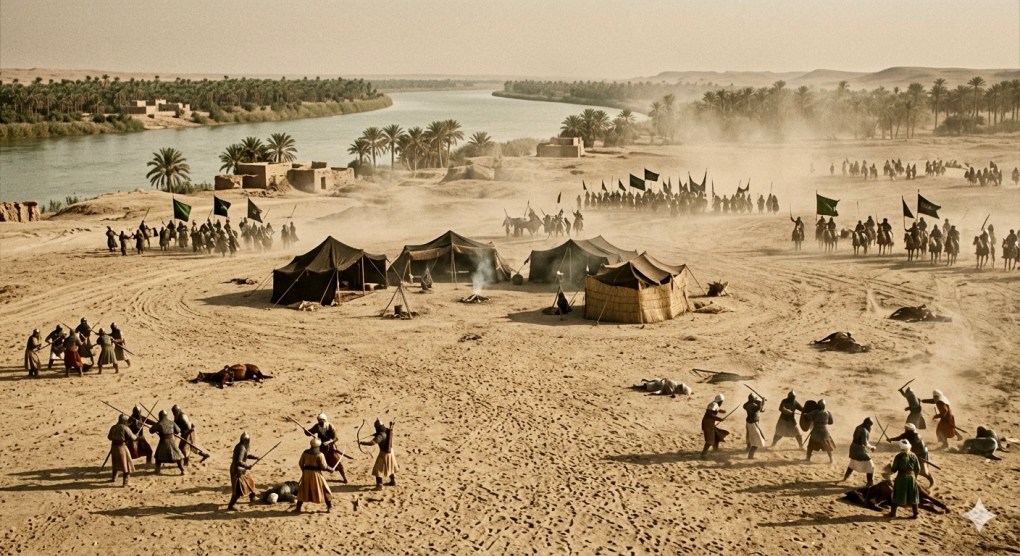
Imam Hussein left Mecca for Kufa (in Iraq) at the invitation of supporters there, but Umayyad forces intercepted him at Karbala. Despite knowing the likely outcome—betrayal by many Kufans, numerical inferiority (his group of about 72 fighters against thousands), and the prospect of martyrdom for himself, family, and companions—he proceeded.
His decision reflected a deliberate choice for principled resistance over submission. He stated his goal was to reform the community, command good, and forbid evil, following the path of his grandfather and father. Living under oppressors was seen as hardship; death in defense of truth was martyrdom (shahada) that would expose tyranny and revive Islamic values.
Imam Hussein was aware of the risks, including warnings about Kufa. Yet he continued, accompanied by women and children, emphasizing that his mission was not conquest but awakening through sacrifice. The battle resulted in the martyrdom of Hussein, most of his male relatives and companions on Ashura. The survivors, including women and his son Imam Zayn al-Abidin, were taken captive. This tragedy galvanized opposition to Umayyad rule and cemented Karbala’s symbolic power.
The choice highlighted that true victory lies in upholding principles, not military success. His stand prevented the complete erosion of Islamic ideals under tyranny.
Similar Historical Incidents
Karbala echoes other instances of small groups or individuals defying overwhelming oppressive forces in the name of justice, often at great personal cost, inspiring long-term change.
One parallel is the resistance of early Christian martyrs or figures like Socrates, who chose death over compromising truth. More closely, within broader history, the Battle of Thermopylae (480 BCE), where King Leonidas and a small force of Spartans and allies held off a massive Persian army, shares themes of sacrificial defense of freedom and values against empire, though the contexts differ.
In Islamic history, uprisings following Karbala, such as those led by Mukhtar al-Thaqafi or the Tawwabin (Penitents), who sought to avenge Hussein, mirrored the spirit of resistance, though with varying success. Zayd ibn Ali’s revolt against the Umayyads also exemplified Alid resistance.
Broader examples include Mahatma Gandhi’s non-violent resistance or Nelson Mandela’s fight against apartheid—sacrifices that exposed injustice and mobilized moral conscience, much like Karbala’s enduring impact.
Lessons for Non-Muslims
Imam Hussein’s sacrifice transcends sectarian or religious boundaries, offering universal lessons in courage, justice, and moral integrity.
Non-Muslim thinkers have praised it extensively. Mahatma Gandhi noted learning from Hussein how to achieve victory while oppressed, seeing it as proof that Islam’s progress stems from sacrifice, not the sword. Charles Dickens highlighted the purity of motive, as Hussein’s family accompanied him, ruling out worldly ambition. Jawaharlal Nehru viewed it as an example of righteousness for all humanity. Rabindranath Tagore and others admired the triumph of principle over power.
Key lessons include standing against oppression regardless of odds, the power of symbolic sacrifice to awaken society, prioritizing ethical leadership, and the idea that truth and justice endure beyond physical defeat. It inspires critical solidarity against tyranny and reminds us that defending human values—dignity, truth, and resistance to corruption—is a shared human imperative.
Impact on Shia Self-Sacrifice and Bravery Compared to Other Sects
The Battle of Karbala profoundly shaped Shia identity, making self-sacrifice and resilience central tenets. For Shias, Hussein’s martyrdom symbolizes the eternal struggle of good against evil, with annual commemorations (majalis, processions, and Ashura rituals) reinforcing themes of loyalty, bravery, and readiness to suffer for justice. This has fostered a strong culture of devotion, communal mourning, and historical memory of resistance, often linked to political and social activism against perceived oppression.
Sunnis also regard Karbala as a tragedy and condemn the killing of the Prophet’s grandson, honoring Hussein’s piety. However, it does not occupy the same foundational, ritualized role in Sunni theology or practice as in Shia tradition, where it is seen as a pivotal redemptive event defining the community’s ethos.
This has arguably inculcated a more pronounced emphasis on sacrificial bravery and endurance among Shias, evident in historical revolts, cultural expressions, and modern contexts. Yet bravery and self-sacrifice appear across Islamic history in various sects (e.g., Sufi asceticism, Sunni jihad traditions, or reform movements). Karbala’s unique intensity for Shias stems from its role as a “founding tragedy” akin to a passion narrative, deepening emotional and ideological commitment.
In conclusion, Imam Hussein’s stand at Karbala remains a beacon of principled defiance. It challenges all people—Muslim and non-Muslim—to choose justice over expediency. Its legacy endures not in victory on the battlefield, but in the hearts of those inspired to uphold truth amid adversity.
The Influence of Imam Hussein’s Example on Contemporary Shia Resilience in Iran Amid Conflicts with the US and Israel
The legacy of Hazrat Imam Hussein’s stand at Karbala continues to serve as a powerful ideological and cultural framework for many Shia Muslims, particularly in Iran, where it shapes national identity, revolutionary ideology, and responses to external pressures. In the context of recent escalations with the United States and Israel—including direct military confrontations in 2024 and the intense 12-Day War of June 2025—this narrative of principled resistance against overwhelming odds has been actively invoked to promote endurance, sacrifice, and defiance.
Historical and Ideological Context
Iran’s Islamic Republic, established after the 1979 Revolution, draws heavily on Shia theology centered on the Battle of Karbala. Imam Hussein’s refusal to submit to Yazid, his willingness to face martyrdom with a small group of companions, and the themes of justice versus tyranny are reframed as a model for modern “resistance” (muqawama). The Islamic Revolutionary Guard Corps (IRGC) and state institutions incorporate this “Karbala paradigm” into training, propaganda, and doctrine. Slogans like “Every day is Ashura, and every place is Karbala” underscore a worldview where hardship and loss are not defeats but redemptive acts that strengthen the community.
This ideology portrays external adversaries—often the US (“Great Satan”) and Israel (“Zionist entity”)—as contemporary embodiments of oppressive forces. It encourages a culture of martyrdom (shahada), where leaders, soldiers, and civilians enduring sanctions, assassinations, or strikes are elevated as martyrs, galvanizing public resolve rather than breaking it.
Application to Recent Conflicts
In the face of prolonged US sanctions, proxy conflicts, and direct military actions, Iranian leaders and media have explicitly linked current struggles to Karbala. During escalations in 2024 (missile and drone exchanges) and especially the 2025 12-Day War—marked by Israeli and US strikes on Iranian nuclear and military sites, significant damage to infrastructure, missile depletion, and the reported killing of Supreme Leader Ayatollah Ali Khamenei—Iranian narratives framed the events as a modern Ashura. Khamenei’s death was portrayed as martyrdom, fueling rather than diminishing determination.
The regime and its supporters argue that this spiritual resilience has enabled Iran to “withstand” pressure: avoiding full capitulation, maintaining the Islamic Republic’s core structures, and continuing asymmetric responses through the “Axis of Resistance” (proxies like Hezbollah, Houthis, and Iraqi militias). Despite military setbacks—such as damaged nuclear facilities and losses in the 2025 war—the state has used the Karbala motif to rally domestic support, justify endurance under sanctions, and project long-term ideological victory. Officials and clerics quote Imam Hussein’s words on preferring honorable death over life under oppression.
This has contributed to a form of strategic resilience: the willingness to absorb heavy costs (economic hardship, infrastructure damage, leadership losses) without systemic collapse, at least in the short term. The IRGC’s ideological training reinforces self-sacrifice, helping sustain recruitment and loyalty amid adversity.
Limitations and Broader Realities
While the Karbala-inspired ethos demonstrably bolsters ideological cohesion and propaganda effectiveness, its role should not be overstated as the sole factor. Iran’s resilience also stems from geographic advantages, alliances (e.g., with Russia and China), asymmetric warfare capabilities, oil revenues managed through evasion networks, and domestic security apparatus. The 2025 war highlighted vulnerabilities, including air defense weaknesses and the high costs of confrontation, leading to ceasefires and reported diplomatic maneuvering.
Critics note that this narrative can prolong suffering for the Iranian people through sustained isolation and militarization, even as the regime survives. Not all Iranians equally embrace this framing; reformist voices and public discontent over economic woes exist. Nonetheless, for the ruling establishment and many devout Shias, Hussein’s example provides a transcendent rationale for resistance, transforming potential despair into purpose.
In summary, yes—the sacrifices and resilience exemplified by Imam Hussein have significantly influenced how Iran’s Shia leadership and segments of society have framed and endured recent conflicts with the US and Israel. It offers a moral and motivational toolkit for prolonged defiance, reinforcing the view that principled stand, even in apparent defeat, ultimately exposes tyranny and preserves dignity. This dynamic echoes Karbala’s enduring power but operates within the complex realities of modern geopolitics, technology, and statecraft. As with the original event, the long-term historical judgment depends on whether it leads to broader justice or continued cycles of conflict.
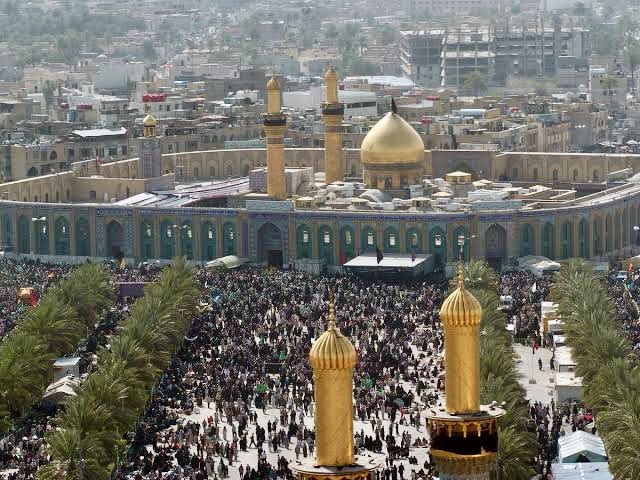
Shrine of Hazrat Imam Hussein at Karbala


The spirit of Karbala infuses the spirit to take on the Satanic Americans. The IRGC is the epitome of the Karbala spirit. All the might of the American hardware and Israels intelligence capabilities could not take on the Iranian resolve to fight back.
LikeLike
Thank you Naidu. The less said the better!
LikeLike