Education is one of the greatest foundations of a nation’s development, prosperity, and survival. It equips citizens with knowledge, critical thinking, scientific temper, and the skills required to build a strong economy. Every developed nation has invested heavily in educating its people because an educated population is more productive, innovative, and capable of holding its leaders accountable. Conversely, when education is neglected, a country risks economic stagnation, unemployment, poverty, and social instability.
The younger generation represents the future of every nation. Students who spend years preparing for examinations deserve a fair and transparent system in which success is determined solely by merit, hard work, and ability. This is particularly important in developing countries, where government jobs and professional careers often provide the primary path to economic security and social mobility. If examination systems become corrupt through paper leaks, cheating, or manipulation, confidence in public institutions is severely damaged.
Throughout history, enlightened governments have recognized that education is an investment rather than an expense. Nations such as Japan, South Korea, Finland, Singapore, and Germany transformed themselves into economic powers by expanding access to quality education and ensuring that recruitment into universities and public services was based largely on merit. These countries understood that national progress depends upon educated citizens capable of innovation and responsible participation in public life.
Political scientists have sometimes argued that some governments, particularly those with authoritarian tendencies or weak democratic institutions, may place less emphasis on expanding quality education or encouraging critical thinking because an informed electorate is more likely to question poor governance, corruption, unemployment, inadequate healthcare, rising prices, law and order failures, and poverty. However, such patterns should not be generalized to all governments or political systems.
History offers several examples where citizens demanded better governance after prolonged dissatisfaction.
In South Korea during the 1980s, sustained public protests and student movements helped accelerate democratic reforms.
In Indonesia, widespread public demonstrations in 1998 contributed to the end of President Suharto’s long rule and initiated democratic reforms.
In several Eastern European countries, peaceful popular movements during 1989 led to the collapse of one-party communist governments and the establishment of democratic institutions.
These examples demonstrate that informed citizens, active civil society, an independent judiciary, free media, and democratic elections are among the constitutional means through which governments can be held accountable.
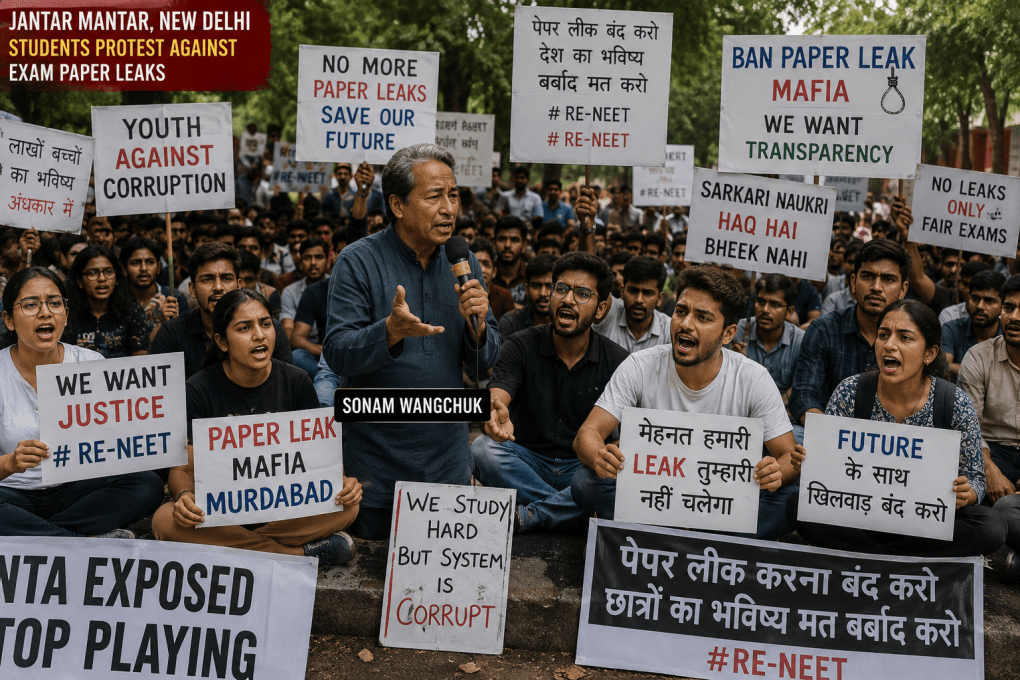
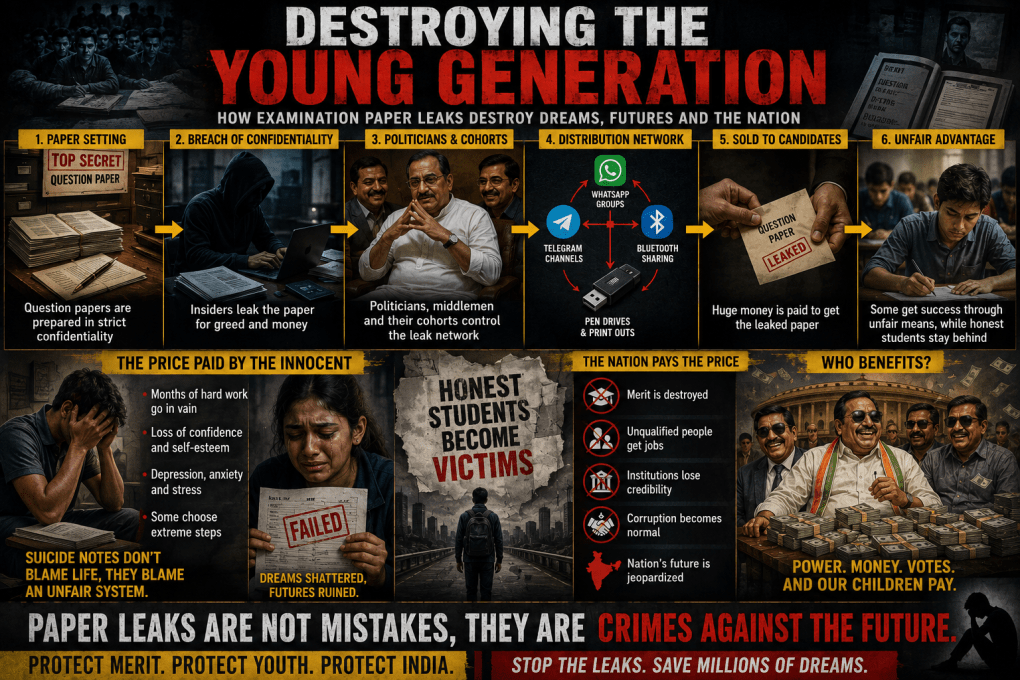
India, the world’s largest democracy, has long regarded education as a fundamental instrument of national development. Yet recurring incidents of examination paper leaks and irregularities have caused deep anxiety among millions of students. For candidates who devote years of disciplined preparation, the leakage of examination papers is not merely an administrative failure; it is a betrayal of trust. Student protests have reflected demands for transparency, accountability, and protection of merit. Experts have generally noted that legal penalties alone will not solve the problem unless accompanied by systemic administrative and technological reforms.
The present concerns raised by India’s Generation Z should therefore be viewed not merely as protests against isolated examination failures but as a broader appeal for an education system that is fair, reliable, and worthy of public confidence. Young people are asking for equal opportunity rather than special privilege. Their expectations are consistent with the constitutional ideals of equality and justice.
Several practical reforms can significantly strengthen India’s education and examination system.
Examination papers should be encrypted and distributed digitally only shortly before the examination begins.
Multiple question paper sets should be prepared so that any compromised paper can immediately be replaced.
Greater use of computer-based testing, where feasible, can reduce dependence on printed question papers.
Secure printing, transportation, and storage must be supervised through continuous digital monitoring and independent audits.
Officials responsible for examination security should be carefully vetted and held personally accountable for negligence or corruption.
Fast-track courts should dispose of examination fraud cases quickly, with severe penalties for organized criminal networks involved in paper leaks.
Independent oversight bodies should investigate every major examination irregularity and publish transparent reports.
Finally, students whose examinations are cancelled because of administrative failures should receive timely rescheduling and appropriate support so that they are not unfairly disadvantaged.
Beyond examination reforms, India must continue improving the overall quality of education.
Greater investment in teacher training, modern classrooms, scientific research, digital infrastructure, vocational education, and skill development will prepare young people for the rapidly changing global economy.
Education should not merely produce examination success; it should cultivate ethical values, creativity, innovation, and responsible citizenship.
Education is not simply a pathway to employment; it is the cornerstone of democracy, economic growth, and national progress.
A society that protects the integrity of its educational system protects the future of its children. Governments, educational institutions, teachers, parents, and students all share responsibility for preserving fairness and merit. When every student can compete on equal terms and succeed through honest effort, the nation as a whole becomes stronger, more prosperous, and Great!
Education is one of the greatest foundations of a nation’s development, prosperity, and survival. It equips citizens with knowledge, critical thinking, scientific temper, and the skills required to build a strong economy. Every developed nation has invested heavily in educating its people because an educated population is more productive, innovative, and capable of holding its leaders accountable. Conversely, when education is neglected, a country risks economic stagnation, unemployment, poverty, and social instability.
The younger generation represents the future of every nation. Students who spend years preparing for examinations deserve a fair and transparent system in which success is determined solely by merit, hard work, and ability. This is particularly important in developing countries, where government jobs and professional careers often provide the primary path to economic security and social mobility. If examination systems become corrupt through paper leaks, cheating, or manipulation, confidence in public institutions is severely damaged.
Throughout history, enlightened governments have recognized that education is an investment rather than an expense. Nations such as Japan, South Korea, Finland, Singapore, and Germany transformed themselves into economic powers by expanding access to quality education and ensuring that recruitment into universities and public services was based largely on merit. These countries understood that national progress depends upon educated citizens capable of innovation and responsible participation in public life.
Political scientists have sometimes argued that some governments, particularly those with authoritarian tendencies or weak democratic institutions, may place less emphasis on expanding quality education or encouraging critical thinking because an informed electorate is more likely to question poor governance, corruption, unemployment, inadequate healthcare, rising prices, law and order failures, and poverty. However, such patterns should not be generalized to all governments or political systems.
History offers several examples where citizens demanded better governance after prolonged dissatisfaction.
In South Korea during the 1980s, sustained public protests and student movements helped accelerate democratic reforms.
In Indonesia, widespread public demonstrations in 1998 contributed to the end of President Suharto’s long rule and initiated democratic reforms.
In several Eastern European countries, peaceful popular movements during 1989 led to the collapse of one-party communist governments and the establishment of democratic institutions.
These examples demonstrate that informed citizens, active civil society, an independent judiciary, free media, and democratic elections are among the constitutional means through which governments can be held accountable.
India, the world’s largest democracy, has long regarded education as a fundamental instrument of national development. Yet recurring incidents of examination paper leaks and irregularities have caused deep anxiety among millions of students. For candidates who devote years of disciplined preparation, the leakage of examination papers is not merely an administrative failure; it is a betrayal of trust. Student protests have reflected demands for transparency, accountability, and protection of merit. Experts have generally noted that legal penalties alone will not solve the problem unless accompanied by systemic administrative and technological reforms.
The present concerns raised by India’s Generation Z should therefore be viewed not merely as protests against isolated examination failures but as a broader appeal for an education system that is fair, reliable, and worthy of public confidence. Young people are asking for equal opportunity rather than special privilege. Their expectations are consistent with the constitutional ideals of equality and justice.
Several practical reforms can significantly strengthen India’s education and examination system.
Examination papers should be encrypted and distributed digitally only shortly before the examination begins.
Multiple question paper sets should be prepared so that any compromised paper can immediately be replaced.
Greater use of computer-based testing, where feasible, can reduce dependence on printed question papers.
Secure printing, transportation, and storage must be supervised through continuous digital monitoring and independent audits.
Officials responsible for examination security should be carefully vetted and held personally accountable for negligence or corruption.
Fast-track courts should dispose of examination fraud cases quickly, with severe penalties for organized criminal networks involved in paper leaks.
Independent oversight bodies should investigate every major examination irregularity and publish transparent reports.
Finally, students whose examinations are cancelled because of administrative failures should receive timely rescheduling and appropriate support so that they are not unfairly disadvantaged.
Beyond examination reforms, India must continue improving the overall quality of education.
Greater investment in teacher training, modern classrooms, scientific research, digital infrastructure, vocational education, and skill development will prepare young people for the rapidly changing global economy.
Education should not merely produce examination success; it should cultivate ethical values, creativity, innovation, and responsible citizenship.
Education is not simply a pathway to employment; it is the cornerstone of democracy, economic growth, and national progress.
A society that protects the integrity of its educational system protects the future of its children. Governments, educational institutions, teachers, parents, and students all share responsibility for preserving fairness and merit. When every student can compete on equal terms and succeed through honest effort, the nation as a whole becomes stronger, more prosperous, and Great!